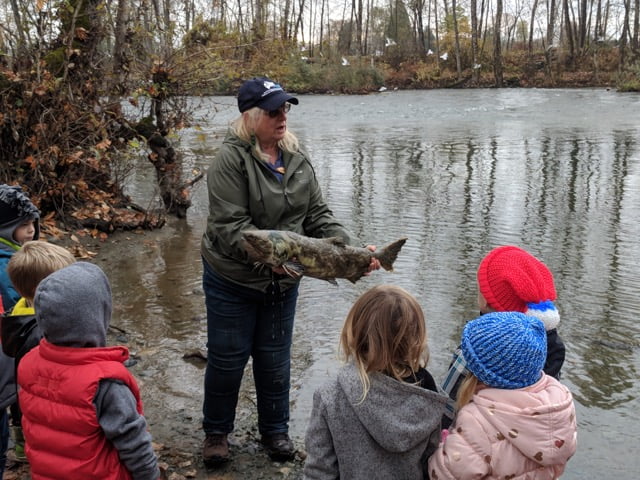
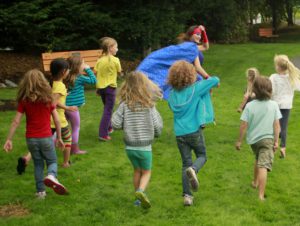
Cowichan Valley Docent, Genevieve Singleton, teaches children about salmon.
We want the people of the Cowichan Valley to understand and value that their well-being is interconnected with the well-being of their watershed.
Mukw' stem 'o' slhilhukw'tul: everything is interconnected.
Indicators:
- All students in grade 2 participate in at least one place-based learning experience to form a connection to their watershed.
- All students in grade 9 participate in an outdoor place-based experience to help them understand how their well-being is interconnected with their watershed.
- An annual tally is kept to track the overall educational and stewardship opportunities offered to help residents of all ages understand and value their watershed.
Rationale
The Cowichan Watershed Board (CWB) is seeking a sustainable future for the people and ecosystems of the Cowichan watershed. Supporting

Rodger Hunter leads an educational watershed tour - Greendale Trestle tourstop.
that vision over the long term requires a deeper understanding of the interconnectivity between our quality of life and the health of the watershed that supports us. It also requires public confidence and support in the CWB leadership, management plan, and activities. As such, the CWB and its many partners are working to build “watershed intelligence” (or IQ) through classroom programs, guest lectures, watershed tours, citizen science, public meetings, and more. Engaging children is about building early connections to nature through watershed experiences. To attempt to reach every child, the partners in the Watershed IQ working group decided to focus on one grade level, choosing Grade 4/5 based on the public school curriculum.
Progress
Watershed Tours: Based on the idea that “seeing is believing,” CWB has hosted dozens of full-day guided bus tours, starting with the weir and shorelines of Cowichan Lake to the estuary at Cowichan Bay. Tour guests learn about the ecology, challenges, successes and politics of keeping the Cowichan watershed healthy.
Public lectures: Since 2014, through a partnership with Vancouver Island University’s Cowichan campus, CWB has co-hosted a monthly speakers series, providing free public lectures by experts on relevant watershed issues. Read about all the speakers - past and present - here.
The Cowichan Valley Naturalists and Cowichan Stewardship Roundtable similarly host monthly lectures, and the Cowichan Estuary Nature Centre offers films and other educational events.
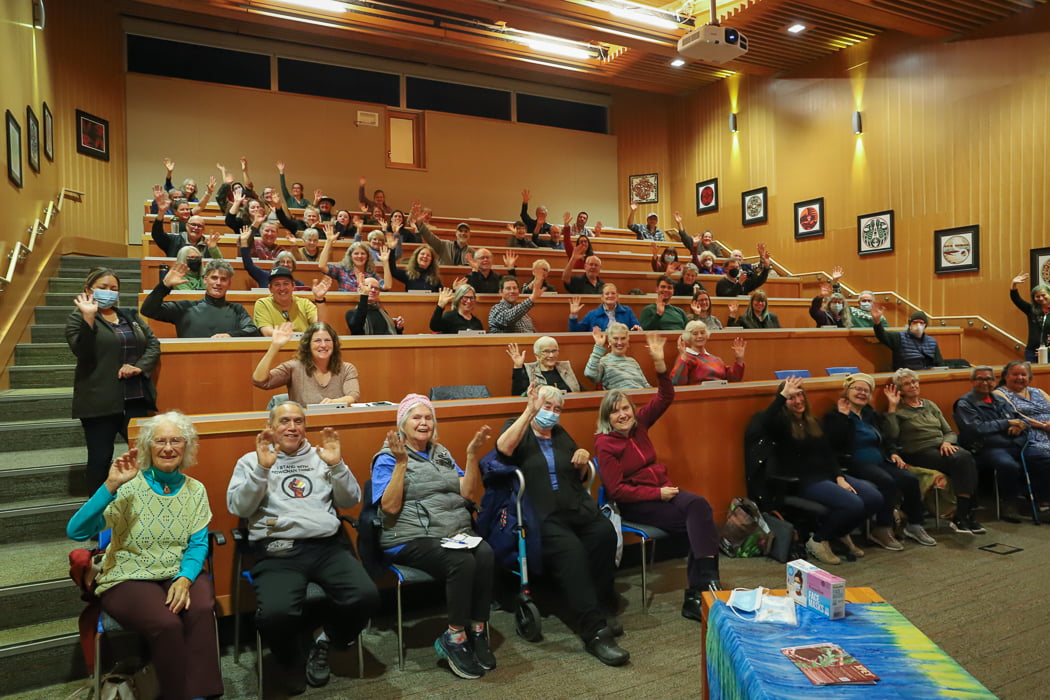
March 2023 XPey' (Cedar) Speaker Night at VIU Cowichan with Speakers from Quw'utsun Cultural Connections and BCMoF Cowichan Lake Research Station.
Classroom Coordination: The CWB’s watershed IQ group seeks to identify gaps and opportunities for collaboration between the many environmental education programs offered by groups such as the Cowichan Lake and River Stewardship Society (CLRSS), Cowichan Land Trust, DFO, the Cowichan Lake Salmonid Enhancement Society, Cowichan Valley Docents, and the Cowichan Green Community. The group works with classroom teachers to get all children out for a watershed experience at least once during elementary school. Work is ongoing to streamline this effort so that all children connect with their watershed during these formative years.
Shoreline Education: The Cowichan Shoreline Stewardship Project was initiated in 2014 to engage and educate residents about riparian areas. Volunteers from the CLRSS visit shoreline owners to explain the benefits of natural vegetation. A survey measured owners’ knowledge of riparian protection bylaws and attitudes about balancing their recreational needs with the ecological value of retaining natural shoreline vegetation. Restored sites were used as demonstration areas for riparian tours to engage a wider audience including media, politicians and other property owners. As a result, now property owners are approaching CLRSS to have their properties restored, instead of volunteers having to reach out to the property owners.
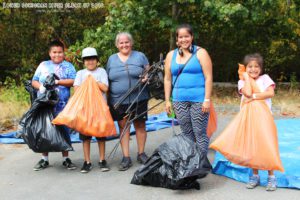
Families pitch in for annual River Cleanup events.
River Clean-up: For 10 years, annual river clean-ups encourage citizens to get their hands wet at one of two coordinated full-day events. The CLRSS organizes a Cowichan Lake clean-up, and the CWB and Cowichan Tribes co-host the lower river clean-up. About 200 volunteers turn out annually to help remove litter and debris from the river and shorelines.
Next Steps
- Continue to develop tools and protocols to improve lines of communication/working relationships between aquatic environmental educators in Cowichan Valley
- Write grant proposal for funding to allow for full school district participation in salmon education watershed field trips
 Email
Email