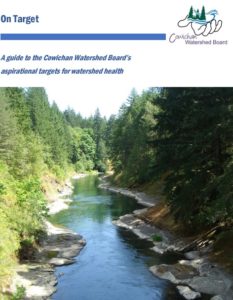
 The Cowichan Basin Water Management Plan (2007) included an ambitious and daunting to-do list comprising a vision, six goals, 23 objectives, and 89 actions. However, when local people sat down together with the plan as the newly formed Cowichan Watershed Board, they decided that a more motivating and inclusive vision was needed to guide implementation. The list had to be refined to form a set of more manageable targets that the community, including Cowichan Tribes, could support.
Draft targets were considered for months by the Technical Advisory Committee, carefully running each through a set of criteria to arrive at the Target set that is still guiding CWB today. The targets were intended as aspirational initiatives, distilled into powerful statements that became rallying cries. Efforts were made to make each target tangible, measurable and achievable, either directly or by adding measurable progress indicators.
A brief background on each target with updates as of 2018 are at the links below.
- Water Quality
- Estuarine Health
- Salmon Sustainability
- Wise Water Use
- Watershed Connection (formerly Watershed IQ)
- Water Supply / Flows
- Riparian Habitats Protection
Or download the complete target review here CWB Targets for Watershed Health - 2018 Update
Target Working Groups
CWB is moving towards its targets with the help and guidance of 5 target working groups. Learn more about them here.
Related Documents
Cowichan Watershed Board - Targets Presentation-TomRutherford-07Jul2011
 Email
Email